In short
Textured epoxy — also called multilayer or quartz epoxy — is a multi-layer system in which quartz or corundum aggregate is broadcast between epoxy coats to build a slip-resistant, highly abrasion-resistant surface 4–8 mm thick. It is the right choice for factories, warehouses, ramps, automotive workshops and food processing areas with forklift traffic, wet or oily working conditions and impact loads.
Also known as: multilayer epoxy · quartz epoxy · broadcast epoxy floor · anti-slip epoxy flooring · heavy-duty epoxy
What is it?
What is Textured Epoxy Flooring?
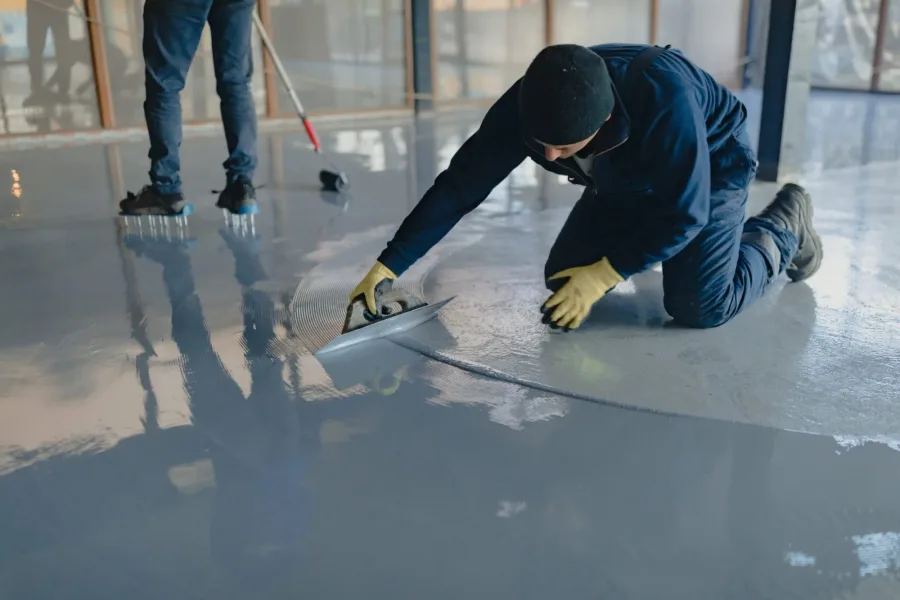
Textured epoxy flooring — also known as multilayer or quartz epoxy — is a multi-layer system in which quartz or corundum aggregate is broadcast between coats of epoxy resin. It offers outstanding resistance to high mechanical loads and abrasion.
This system is built up from an epoxy primer, an intermediate coat, a broadcast of aggregate and a clear or pigmented seal coat. The quartz or corundum broadcast into the intermediate layers adds thickness while significantly raising both abrasion resistance and slip resistance. It is the standard answer for industrial facilities with forklift and heavy vehicle traffic or a risk of chemical spillage. Thicknesses from 4 to 8 mm are available.
This system is part of the Epoxy Floor Coating family; you can compare it with the others in the table below.
System Types and Variants
- Single broadcast (4–5 mm, R10–R11)
- Warehouses, corridors, light production.
- Double broadcast (6–8 mm, R11–R12)
- Forklifts, ramps, wet and oily areas.
- Corundum aggregate
- Very high abrasion; heavy industry and loading bays.
- Coloured quartz (decorative textured)
- Appearance plus slip resistance: schools, sports facilities, changing rooms.
How Is It Applied? The Stages
- 1. Surface preparationShot-blasting or grinding, repair, moisture testing.
- 2. Primer + first quartz broadcastQuartz aggregate is broadcast to refusal into the wet primer; the excess is swept off.
- 3. Build coat + second broadcastA pigmented epoxy build coat and a second quartz broadcast create the thickness and texture (4–8 mm).
- 4. Seal coatA pigmented or clear epoxy / polyurethane seal; the slip class (R11/R12) is set by the thickness of this coat.
- 5. Curing and handoverFoot traffic after 48 hours, vehicles after 72 hours, full load after 7 days.
Technical Specifications
Where It Is Used
- Factory and production plant floors
- Warehouses and logistics centres
- Automotive workshops and service bays
- Food processing areas and cold stores
- Pharmaceutical and chemical plants
- Loading bays, ramps and corridors
Advantages
- 01 Maximum abrasion resistance from the multi-layer build
- 02 Fully suited to forklift and heavy vehicle traffic
- 03 Slip resistance class can be specified
- 04 Protection against chemical and oil spillage
- 05 A long-life investment with low maintenance cost
Drawbacks and Limitations
- A textured surface is slightly harder to clean than a smooth one; the depth of texture should be matched to the use.
- It is thicker than self-leveling and takes longer to install.
- Do not expect a high-gloss decorative appearance; this is an industrial surface.
When Should You Choose It?
Choose it when
- Forklift, pallet-truck and lorry traffic
- Floors at risk of water, oil or chemical spillage
- Ramps, loading areas, stairs and pedestrian routes
- HACCP and food processing areas needing slip resistance and durability together
Consider another system
- Where a smooth, easily mopped surface comes first → self-leveling
- Impact and very high point loads (steel industry) → epoxy mortar
- Where appearance comes first → metallic or decorative epoxy
Epoxy Flooring Systems Compared
| System | Thickness | Service life | Traffic | Slip resistance | Best for |
|---|---|---|---|---|---|
| Epoxy Paint / Coating | 0.3 – 0.6 mm | 5 – 8 years | Light – medium | Smooth (R9–R10 with additive) | Garages, warehouses, workshops, dust-proofing |
| Self-Leveling Epoxy | 2 – 3 mm | 10 – 15 years | Medium – heavy foot, light vehicle | Smooth (R9–R10 with additive) | Hospitals, offices, food plants, retail |
| Textured (Multilayer) | 4 – 8 mm | 15 – 20 years | Heavy — forklift, truck | R11 – R12 | Factories, warehouses, ramps, wet areas |
| Epoxy Mortar | 4 – 9+ mm | 15 – 25 years | Very heavy, impact | R10 – R12 (texture dependent) | Food/chemical plants, concrete repair |
| Anti-Static / ESD Epoxy | 2 – 3 mm | 10 – 15 years | Medium | Smooth | Electronics, data centres, operating theatres |
| Metallic Epoxy | 2 – 3 mm | 8 – 12 years | Foot, light commercial | Smooth (gloss) | Showrooms, lobbies, villas, cafés |
| Stone Carpet | 8 – 15 mm | 8 – 12 years | Foot, light vehicle | R11 – R12 | Outdoors: gardens, terraces, poolsides |
Alternative Systems
- Epoxy mortar
- Impact and very heavy loads; repair of damaged concrete.
- Self-leveling epoxy
- Where hygiene and smoothness come first.
- Polyurethane-cement (PU mortar)
- Where there is hot water or steam cleaning and thermal shock.
What Drives the Price
- Number of broadcasts and total thickness (4 mm / 6 mm / 8 mm)
- Aggregate type (quartz / corundum / coloured quartz)
- Slip resistance class and seal coat thickness
- Amount of surface preparation and repair
- Size of the area, ramp and stair details
Textured Epoxy: 1.100 – 2.200 ₺/m²
Epoxy Floor Coating Prices →
A firm price per m² is given only after a free site survey, based on the condition of the slab and the system chosen.
Relevant Standards and Technical References
- DIN 51130 (R9–R13 slip resistance)
- DIN 51097 (wet barefoot areas, A/B/C)
- EN 13813
- EN 1504-2
Technical data sheets (TDS) and certificates of conformity for the products used are provided at quotation stage.
Warranty
Zeminsan Epoksi provides a 5-year written warranty covering both labour and materials on Textured Epoxy Flooring. The scope of the warranty (blistering, delamination, loss of adhesion) and the maintenance conditions are set out explicitly in the contract.