In short
Anti-static (ESD) epoxy is a specialist floor that, through conductive additives and a copper-tape earthing grid, discharges static to earth within a 10⁴–10⁶ Ω resistance range instead of letting it accumulate on the surface. It is mandatory wherever electrostatic discharge could damage equipment, product or personnel: electronics manufacturing and assembly, data centres, operating theatres, pharmaceutical clean rooms and explosive (ATEX) atmospheres.
Also known as: ESD epoxy · conductive epoxy flooring · static dissipative flooring · anti-static floor coating
What is it?
What is Anti-Static Epoxy Flooring?
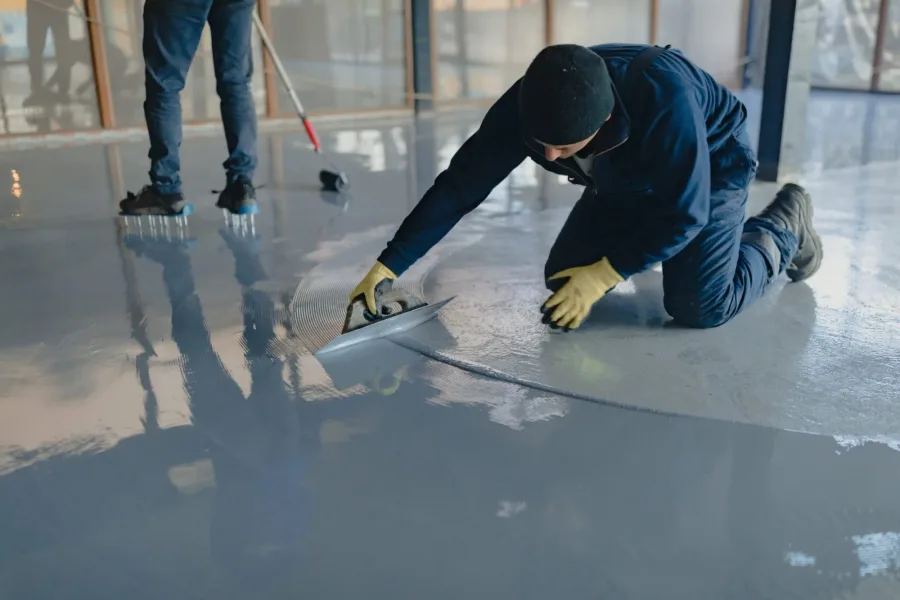
Anti-static epoxy flooring uses conductive additives to discharge static electricity before it can build up on the floor, protecting electronic equipment and personnel from electrostatic discharge.
Static electricity is a serious risk to electronic components, explosive materials and sensitive medical equipment. An anti-static (ESD — electrostatic discharge) epoxy floor integrates conductive carbon or graphene fibres into the system, holding surface resistance in the 10⁴–10⁹ ohm range and channelling any accumulated static safely to earth. Zeminsan Epoksi delivers its anti-static systems with a certificate of conformity to EN 61340-5-1.
This system is part of the Epoxy Floor Coating family; you can compare it with the others in the table below.
System Types and Variants
- Static dissipative system
- 10⁶–10⁹ Ω; electronics assembly and office-type ESD areas.
- Conductive system
- 10⁴–10⁶ Ω; explosive atmospheres, operating theatres, high-precision manufacturing.
- Slip-resistant anti-static variant
- Quartz-filled conductive system for wet ESD areas.
How Is It Applied? The Stages
- 1. Surface preparationGrinding, repair and moisture testing.
- 2. PrimerEpoxy primer; cures in 12–24 hours.
- 3. Copper-tape earthing gridCopper tape is laid at set intervals and bonded to the building earth.
- 4. Conductive build coatA carbon-loaded conductive epoxy layer — the electrical backbone of the system.
- 5. Anti-static self-leveling top coatA 2–3 mm pour with conductive fibres or additives; colour options are limited (usually greys).
- 6. Measurement and handoverSurface and earth resistance are measured (EN 61340-5-1 / IEC 61340-4-1) and the floor is handed over with a test report.
Technical Specifications
Where It Is Used
- Electronics manufacturing and assembly plants
- Data centres and server rooms
- Hospital operating theatres and intensive care units
- Pharmaceutical clean rooms
- Military equipment stores
- Explosive material production and storage areas
Advantages
- 01 Conformity with EN 61340-5-1
- 02 Protects electronic components from static
- 03 Provides safety in areas with explosion risk
- 04 Protects both personnel and equipment
- 05 Delivered with a measurement certificate
Drawbacks and Limitations
- The colour palette is limited (usually greys, because of the conductive additives).
- Electrical performance depends on a correct earth connection; if the building earth is inadequate the system will not work.
- An overly thick polish or protective layer destroys conductivity; only ESD-compatible products may be used for maintenance.
When Should You Choose It?
Choose it when
- Electronic component manufacturing, PCB assembly, test laboratories
- Data centres, server rooms, UPS and switchgear rooms
- Operating theatres, intensive care, MRI rooms
- Explosives, paint and solvent stores (ATEX)
Consider another system
- In areas with no ESD requirement it is an unnecessary cost → self-leveling
- Where heavy mechanical load comes first → textured or mortar (anti-static variants are available)
Epoxy Flooring Systems Compared
| System | Thickness | Service life | Traffic | Slip resistance | Best for |
|---|---|---|---|---|---|
| Epoxy Paint / Coating | 0.3 – 0.6 mm | 5 – 8 years | Light – medium | Smooth (R9–R10 with additive) | Garages, warehouses, workshops, dust-proofing |
| Self-Leveling Epoxy | 2 – 3 mm | 10 – 15 years | Medium – heavy foot, light vehicle | Smooth (R9–R10 with additive) | Hospitals, offices, food plants, retail |
| Textured (Multilayer) | 4 – 8 mm | 15 – 20 years | Heavy — forklift, truck | R11 – R12 | Factories, warehouses, ramps, wet areas |
| Epoxy Mortar | 4 – 9+ mm | 15 – 25 years | Very heavy, impact | R10 – R12 (texture dependent) | Food/chemical plants, concrete repair |
| Anti-Static / ESD Epoxy | 2 – 3 mm | 10 – 15 years | Medium | Smooth | Electronics, data centres, operating theatres |
| Metallic Epoxy | 2 – 3 mm | 8 – 12 years | Foot, light commercial | Smooth (gloss) | Showrooms, lobbies, villas, cafés |
| Stone Carpet | 8 – 15 mm | 8 – 12 years | Foot, light vehicle | R11 – R12 | Outdoors: gardens, terraces, poolsides |
Alternative Systems
- Anti-static PVC / vinyl flooring
- For lightly used office-type areas; jointed and less durable.
- Conductive polyurethane flooring
- For ESD areas that also need flexibility and thermal shock resistance.
What Drives the Price
- Target resistance class (dissipative / conductive)
- Density of the copper-tape grid and number of earth points
- Thickness and number of coats
- Scope of measurement and reporting
- Surface preparation and area
Antistatic Epoxy: 1.400 – 2.500 ₺/m²
Epoxy Floor Coating Prices →
A firm price per m² is given only after a free site survey, based on the condition of the slab and the system chosen.
Relevant Standards and Technical References
- EN 61340-5-1 (requirements for ESD protected areas)
- IEC 61340-4-1 (measurement of floor resistance)
- ANSI/ESD S20.20
- ATEX 2014/34/EU (explosive atmospheres)
Technical data sheets (TDS) and certificates of conformity for the products used are provided at quotation stage.
Warranty
Zeminsan Epoksi provides a 5-year written warranty covering both labour and materials on Anti-Static Epoxy Flooring. The scope of the warranty (blistering, delamination, loss of adhesion) and the maintenance conditions are set out explicitly in the contract.