In short
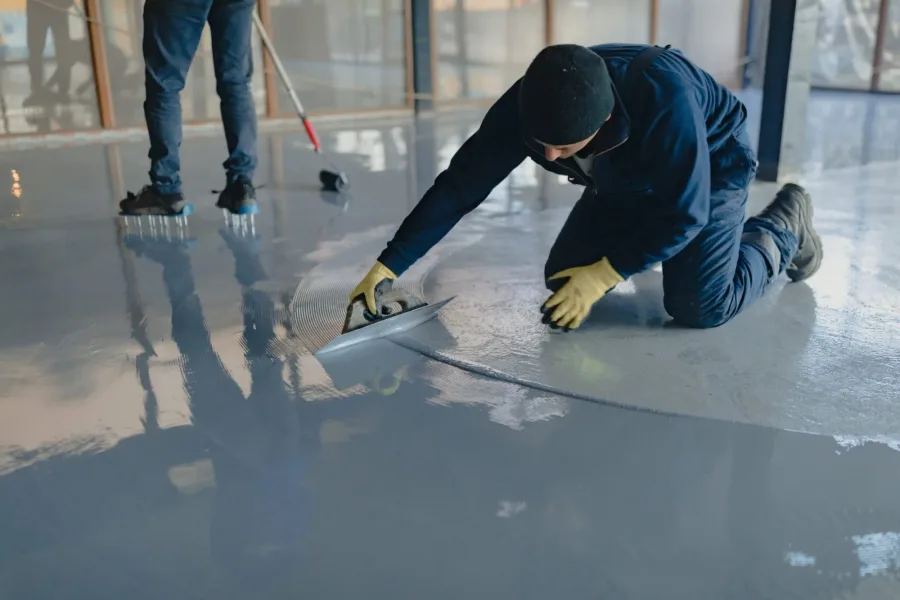
Metallic epoxy is a decorative flooring system in which aluminium, copper or bronze-toned metallic pigments added to epoxy resin flow during application to create a different three-dimensional, layered pattern every time. It is designed for foot-traffic spaces where appearance leads: showrooms, lobbies, boutique hotels, restaurants, villas and corporate offices.
Also known as: metallic epoxy floor · 3D metallic epoxy · decorative epoxy flooring · designer resin floor
What is it?
What is Metallic Epoxy Flooring?
Metallic epoxy flooring blends aluminium, copper, bronze or silver metallic pigments into epoxy resin, producing a three-dimensional appearance and lustre that is unique to every single installation.
Metallic epoxy takes its character from metallic pigment powders mixed into a two-component epoxy base, giving the floor a fluid, living appearance. Every installation produces a genuinely one-off surface; no two floors are ever identical. Applied at 2–3 mm, the system is highly durable while remaining aimed at projects where appearance leads — showrooms, boutique hotels, luxury homes and corporate offices. Finished with a high-gloss seal, the result is a mirror-bright, arresting surface.
This system is part of the Epoxy Floor Coating family; you can compare it with the others in the table below.
System Types and Variants
- Single-colour metallic
- Understated and deep; silver, bronze, anthracite.
- Multi-colour / marbled metallic
- Two or three pigments flowing together into marble-like veining.
- Metallic with matt seal
- For offices and stores where reflection is unwanted.
- Wall and worktop applications
- Continuous surfaces using the same system.
How Is It Applied? The Stages
- 1. Surface preparationGrinding, repair and moisture testing; a smooth substrate determines the quality of the pattern.
- 2. Pigmented primer / base colourA dark or light base colour sets the depth of the metallic effect.
- 3. Metallic coatMetallic pigmented epoxy is poured and the pattern is worked with a roller, brush, air blower or solvent spotting.
- 4. Protective top coatA high-gloss, UV-stable polyurethane or polyaspartic seal prevents yellowing and scratching.
- 5. CuringFoot traffic after 24–48 hours, full strength after 7 days.
Technical Specifications
Where It Is Used
- Showrooms and gallery spaces
- Boutique hotels and reception areas
- Luxury homes and villas
- Corporate offices and lobbies
- Restaurant and café floors
- Sports and wellness centres
Advantages
- 01 A unique, never-repeated pattern on every installation
- 02 Deep three-dimensional metallic appearance
- 03 UV-stable and non-yellowing
- 04 High-gloss finish
- 05 Wide range of colours and pigments
Drawbacks and Limitations
- The pattern is random; a catalogue image cannot be reproduced exactly — which is also the point of it.
- Scratches can show on a gloss surface; the quality of the seal coat and regular care matter.
- It is not built for forklifts or heavy loads; it is for foot traffic and light commercial use.
- It can be slippery in wet areas; use a slip-resistant additive or a matt seal.
When Should You Choose It?
Choose it when
- Showrooms, galleries, lobbies and reception areas
- Villa living spaces, kitchens, stores and cafés
- Where a floor unique to the brand, never repeated, is wanted
Consider another system
- Factories, warehouses and heavy traffic → textured epoxy or mortar
- Hygiene-critical healthcare and food areas → self-leveling
- Outdoors → stone carpet
Epoxy Flooring Systems Compared
| System | Thickness | Service life | Traffic | Slip resistance | Best for |
|---|---|---|---|---|---|
| Epoxy Paint / Coating | 0.3 – 0.6 mm | 5 – 8 years | Light – medium | Smooth (R9–R10 with additive) | Garages, warehouses, workshops, dust-proofing |
| Self-Leveling Epoxy | 2 – 3 mm | 10 – 15 years | Medium – heavy foot, light vehicle | Smooth (R9–R10 with additive) | Hospitals, offices, food plants, retail |
| Textured (Multilayer) | 4 – 8 mm | 15 – 20 years | Heavy — forklift, truck | R11 – R12 | Factories, warehouses, ramps, wet areas |
| Epoxy Mortar | 4 – 9+ mm | 15 – 25 years | Very heavy, impact | R10 – R12 (texture dependent) | Food/chemical plants, concrete repair |
| Anti-Static / ESD Epoxy | 2 – 3 mm | 10 – 15 years | Medium | Smooth | Electronics, data centres, operating theatres |
| Metallic Epoxy | 2 – 3 mm | 8 – 12 years | Foot, light commercial | Smooth (gloss) | Showrooms, lobbies, villas, cafés |
| Stone Carpet | 8 – 15 mm | 8 – 12 years | Foot, light vehicle | R11 – R12 | Outdoors: gardens, terraces, poolsides |
Alternative Systems
- Self-leveling epoxy (single colour)
- A more economical and understated decorative solution.
- Flake epoxy
- A speckled texture with higher slip resistance, for garages and commercial spaces.
- Microcement
- Where a matt, mineral appearance is wanted.
What Drives the Price
- Number of pigments and complexity of the effect
- Surface preparation and flatness of the substrate
- Type of top coat (polyurethane / polyaspartic, matt or gloss)
- Size of the area and detailing (stairs, skirtings)
Metallic Epoxy: 1.000 – 2.500 ₺/m²
Epoxy Floor Coating Prices →
A firm price per m² is given only after a free site survey, based on the condition of the slab and the system chosen.
Relevant Standards and Technical References
- EN 13813
- ISO 2409 (adhesion)
- DIN 51130 (where a slip-resistant additive is used)
Technical data sheets (TDS) and certificates of conformity for the products used are provided at quotation stage.
Warranty
Zeminsan Epoksi provides a 5-year written warranty covering both labour and materials on Metallic Epoxy Flooring. The scope of the warranty (blistering, delamination, loss of adhesion) and the maintenance conditions are set out explicitly in the contract.